(1) Shiina, S.; Maikhuu, J.; Deng, Q.; Batsaikhan, T.; Canseco, L. M.; Tobari, M.; Maruyama, H.; Nagamatsu, H.; Alcantara-Payawal, D.; Gani, R.; Huang, Y.-H.; Tanwandee, T.; Galati, G.; Kim, Y. J. Liver Disease Trends in the Asia-Pacific Region for the next 50 Years. Clin. Mol. Hepatol. 2025, 31 (3), 671–684. https://doi.org/10.3350/cmh.2025.0043.
(2) Li, X.; Tang, J.; Mao, Y. Incidence and Risk Factors of Drug-Induced Liver Injury. Liver Int. Off. J. Int. Assoc. Study Liver 2022, 42 (9), 1999–2014. https://doi.org/10.1111/liv.15262.
(3) Ben-Moshe, S.; Veg, T.; Manco, R.; Dan, S.; Papinutti, D.; Lifshitz, A.; Kolodziejczyk, A. A.; Bahar Halpern, K.; Elinav, E.; Itzkovitz, S. The Spatiotemporal Program of Zonal Liver Regeneration Following Acute Injury. Cell Stem Cell 2022, 29 (6), 973-989.e10. https://doi.org/10.1016/j.stem.2022.04.008.
(4) Chen, S.; Lu, Z.; Jia, H.; Yang, B.; Liu, C.; Yang, Y.; Zhang, S.; Wang, Z.; Yang, L.; Li, S.; Li, J.; Yang, C. Hepatocyte-Specific Mas Activation Enhances Lipophagy and Fatty Acid Oxidation to Protect against Acetaminophen-Induced Hepatotoxicity in Mice. J. Hepatol. 2023, 78 (3), 543–557. https://doi.org/10.1016/j.jhep.2022.10.028.
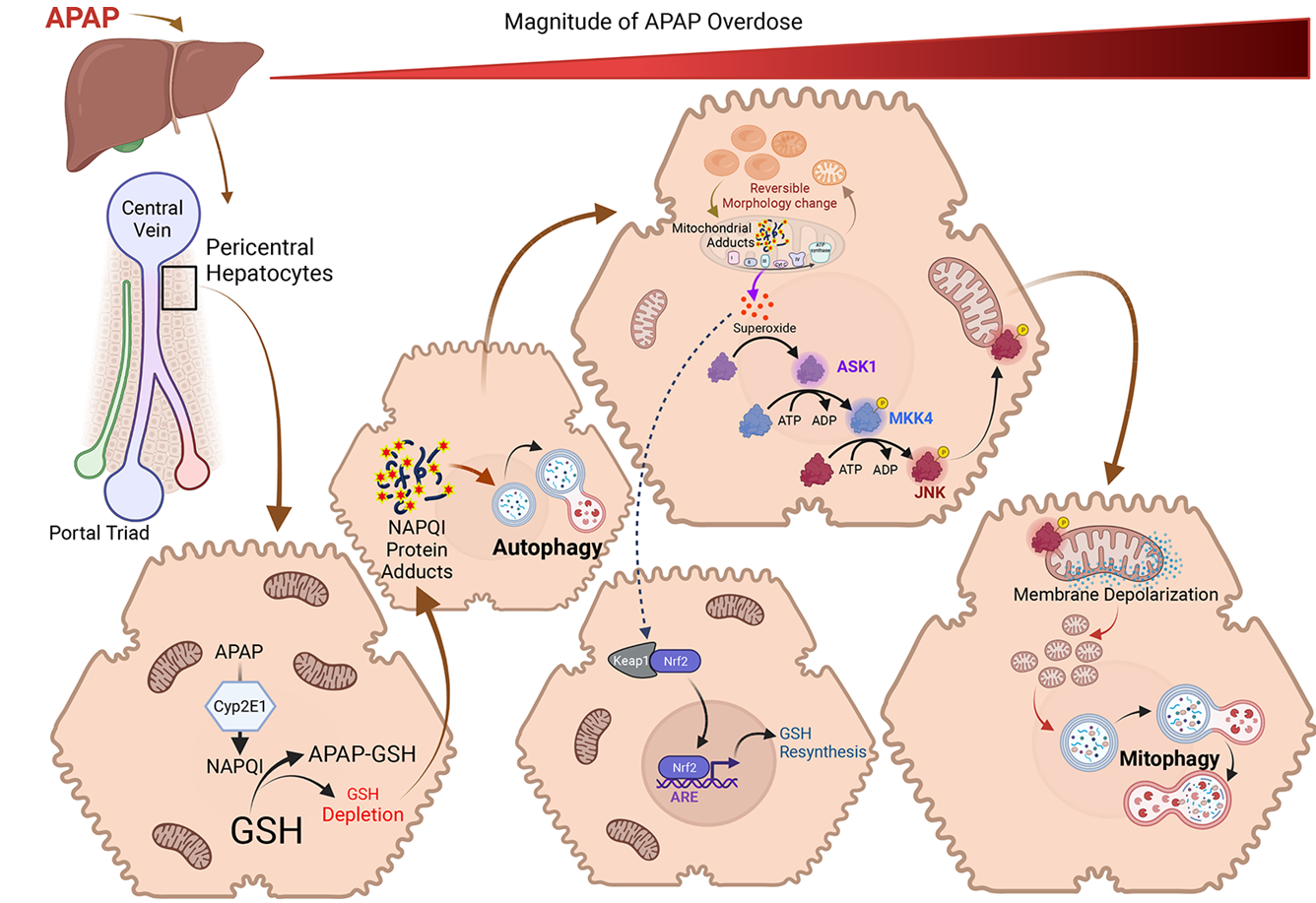
(5) Jaeschke, H.; Ramachandran, A. Acetaminophen Hepatotoxicity: Paradigm for Understanding Mechanisms of Drug-Induced Liver Injury. Annu. Rev. Pathol. 2024, 19, 453–478. https://doi.org/10.1146/annurev-pathmechdis-051122-094016.
(6) Hionides-Gutierrez, A.; Goikoetxea-Usandizaga, N.; Sanz-García, C.; Martínez-Chantar, M. L.; Cubero, F. J. Novel Emerging Mechanisms in Acetaminophen (APAP) Hepatotoxicity. Liver Int. Off. J. Int. Assoc. Study Liver 2025, 45 (4), e16167. https://doi.org/10.1111/liv.16167.
(7) Enomoto, A.; Itoh, K.; Nagayoshi, E.; Haruta, J.; Kimura, T.; O’Connor, T.; Harada, T.; Yamamoto, M. High Sensitivity of Nrf2 Knockout Mice to Acetaminophen Hepatotoxicity Associated with Decreased Expression of ARE-Regulated Drug Metabolizing Enzymes and Antioxidant Genes. Toxicol. Sci. Off. J. Soc. Toxicol. 2001, 59 (1), 169–177. https://doi.org/10.1093/toxsci/59.1.169.
(8) Cai, F.; Zhou, K.; Wang, P.; Zhang, W.; Liu, L.; Yang, Y. A Novel KEAP1 Inhibitor, Tiliroside, Activates NRF2 to Protect against Acetaminophen-Induced Oxidative Stress and Acute Liver Injury. Hepatol. Commun. 2025, 9 (3), e0658. https://doi.org/10.1097/HC9.0000000000000658.
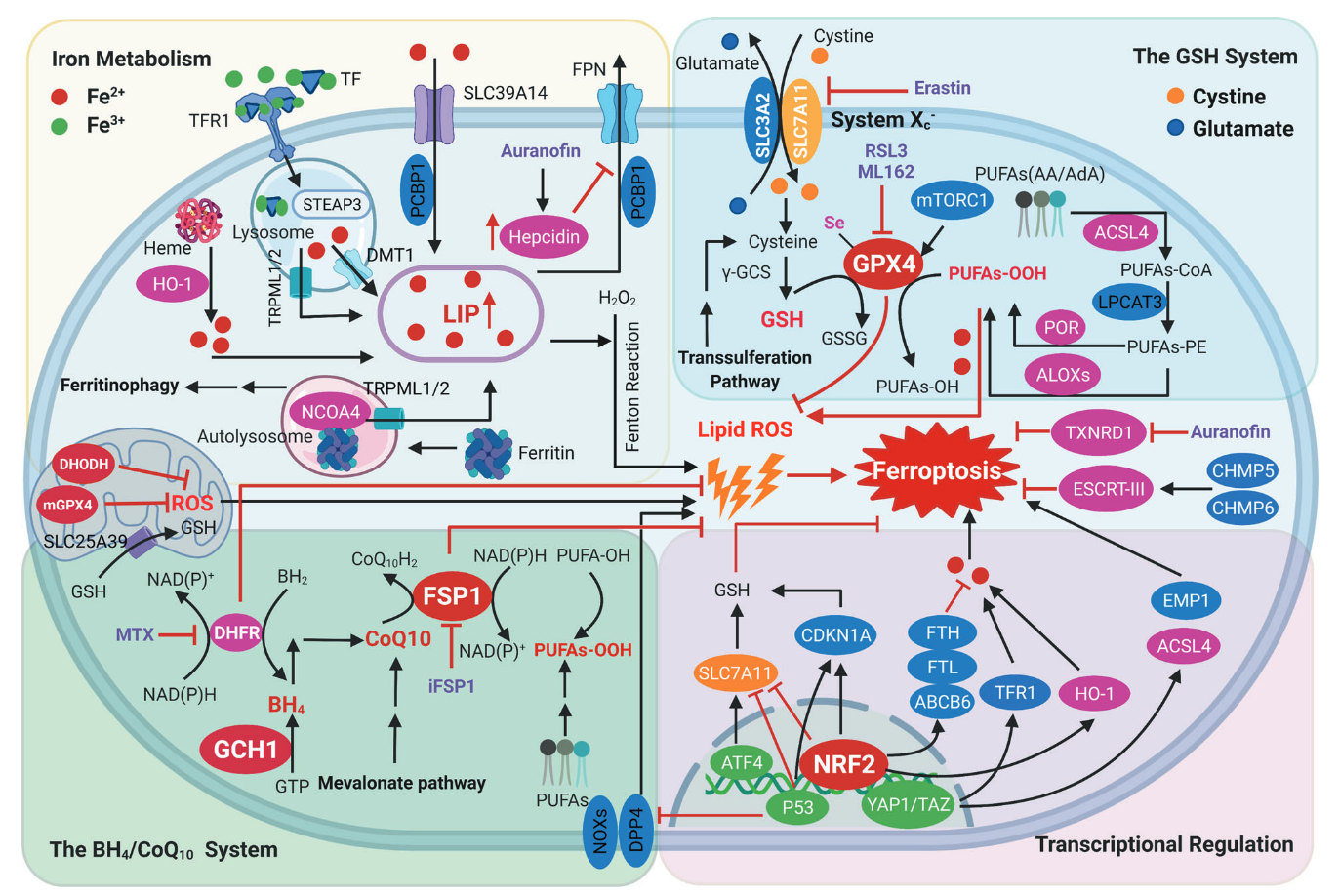
(9) Chen, J.; Li, X.; Ge, C.; Min, J.; Wang, F. The Multifaceted Role of Ferroptosis in Liver Disease. Cell Death Differ. 2022, 29 (3), 467–480. https://doi.org/10.1038/s41418-022-00941-0.
(10) Hionides-Gutierrez, A.; Goikoetxea-Usandizaga, N.; Sanz-García, C.; Martínez-Chantar, M. L.; Cubero, F. J. Novel Emerging Mechanisms in Acetaminophen (APAP) Hepatotoxicity. Liver Int. Off. J. Int. Assoc. Study Liver 2025, 45 (4), e16167. https://doi.org/10.1111/liv.16167.
(11) Zeng, Y.; Wu, R.; Wang, F.; Li, S.; Li, L.; Li, Y.; Qin, P.; Wei, M.; Yang, J.; Wu, J.; Chen, A.; Ke, G.; Yan, Z.; Yang, H.; Chen, Z.; Wang, Z.; Xiao, W.; Jiang, Y.; Chen, X.; Zeng, Z.; Zhao, X.; Chen, P.; Gong, S. Liberation of Daidzein by Gut Microbial β-Galactosidase Suppresses Acetaminophen-Induced Hepatotoxicity in Mice. Cell Host Microbe 2023, 31 (5), 766-780.e7. https://doi.org/10.1016/j.chom.2023.04.002.
(12) Hu, J.; Nieminen, A.-L.; Zhong, Z.; Lemasters, J. J. Role of Mitochondrial Iron Uptake in Acetaminophen Hepatotoxicity. Livers 2024, 4 (3), 333–351. https://doi.org/10.3390/livers4030024.
(13) He, Y.; Lin, Y.; Song, J.; Song, M.; Nie, X.; Sun, H.; Xu, C.; Han, Z.; Cai, J. From Mechanisms to Medicine: Ferroptosis as a Therapeutic Target in Liver Disorders. Cell Commun. Signal. CCS 2025, 23 (1), 125. https://doi.org/10.1186/s12964-025-02121-2.
(14) Mishima, E.; Nakamura, T.; Doll, S.; Proneth, B.; Fedorova, M.; Pratt, D. A.; Friedmann Angeli, J. P.; Dixon, S. J.; Wahida, A.; Conrad, M. Recommendations for Robust and Reproducible Research on Ferroptosis. Nat. Rev. Mol. Cell Biol. 2025, 26 (8), 615–630. https://doi.org/10.1038/s41580-025-00843-2.
(15) Luo, Q.; Li, X.; Huang, J.; Zhao, L.; Liu, L.; Huang, S.; Xu, Y.; Qiu, P.; Li, C. Shenqi Pill Alleviates Acetaminophen-Induced Liver Injury: A Comprehensive Strategy of Network Pharmacology and Spectrum-Effect Relationship Reveals Mechanisms and Active Components. Phytomedicine Int. J. Phytother. Phytopharm. 2024, 135, 156050. https://doi.org/10.1016/j.phymed.2024.156050.
(16) Tang, Z.; Yang, X.; Zhang, M.; Yang, B.; Li, H. Schisandrin B Alleviates APAP-Induced Hepatocyte Ferroptosis via the GPX4 Axis: Insights from Human iPSC-Derived Hepatic Organoids and Rat Models. Phytomedicine Int. J. Phytother. Phytopharm. 2026, 156, 158241. https://doi.org/10.1016/j.phymed.2026.158241.
(17) Pu, R.; Cui, Q.; Xing, Z.; Liu, L.; Xiao, W.; Xiao, Q. Scutellarin Modulates Nrf2 to Alleviate Inflammation, Pyroptosis, and Ferroptosis in Acetaminophen-Induced Hepatotoxicity. Phytomedicine Int. J. Phytother. Phytopharm. 2026, 155, 158107. https://doi.org/10.1016/j.phymed.2026.158107.
(18) Li, Y.; Deng, X.; Hu, Q.; Chen, Y.; Zhang, W.; Qin, X.; Wei, F.; Lu, X.; Ma, X.; Zeng, J.; Efferth, T. Paeonia Lactiflora Pall. Ameliorates Acetaminophen-Induced Oxidative Stress and Apoptosis via Inhibiting the PKC-ERK Pathway. J. Ethnopharmacol. 2024, 329, 118107. https://doi.org/10.1016/j.jep.2024.118107.
(19) Ge, B.; Sang, R.; Wang, W.; Yan, K.; Yu, Y.; Kong, L.; Yu, M.; Liu, X.; Zhang, X. Protection of Taraxasterol against Acetaminophen-Induced Liver Injury Elucidated through Network Pharmacology and in Vitro and in Vivo Experiments. Phytomedicine Int. J. Phytother. Phytopharm. 2023, 116, 154872. https://doi.org/10.1016/j.phymed.2023.154872.
(20) Tao, M.; Shi, J.; Zhang, Y.; Zheng, Y.; Zhao, Y.; Ma, H.; Li, L. Berbamine Attenuates Acetaminophen-Induced Liver Injury by Engaging GCLC and Enhancing Ferroptosis-Regulatory Antioxidant Pathways. Biochim. Biophys. Acta Mol. Basis Dis. 2026, 1872 (4), 168154. https://doi.org/10.1016/j.bbadis.2026.168154.
(21) Zhang, Y.; Lu, Q.; Yan, Y.; Zhang, J.; Liu, T.; Yu, L.; Fan, Q.; Wei, K. Artemisia Keiskeana Miq. Alleviates Oxidative Stress and Ferroptosis in APAP-Induced Liver Injury by Mediating Nrf2/GPX4/NF-κB Signaling Pathway through ESR1. Phytomedicine Int. J. Phytother. Phytopharm. 2025, 148, 157436. https://doi.org/10.1016/j.phymed.2025.157436.
(22) Su, Y.; Zeng, Y.; Zhou, M.; Liao, M.; Qin, P.; Wu, R.; Han, J.; Liang, X.; Wang, Z.; Jiang, J.; Yu, Z.; Huang, X.; Ding, K.; Guo, P.; He, Y.; Du, Y.; Duan, T.; Yuan, H.; Ge, Y.; Chen, A.; Xiao, W. Natural Polyphenol-Mediated Inhibition of Ferroptosis Alleviates Oxidative Damage and Inflammation in Acute Liver Injury. Biomater. Res. 2025, 29, 0167. https://doi.org/10.34133/bmr.0167.
(23) Deng, Y.; Chu, X.; Li, Q.; Zhu, G.; Hu, J.; Sun, J.; Zeng, H.; Huang, J.; Ge, G. Xanthohumol Ameliorates Drug-Induced Hepatic Ferroptosis via Activating Nrf2/xCT/GPX4 Signaling Pathway. Phytomedicine Int. J. Phytother. Phytopharm. 2024, 126, 155458. https://doi.org/10.1016/j.phymed.2024.155458.
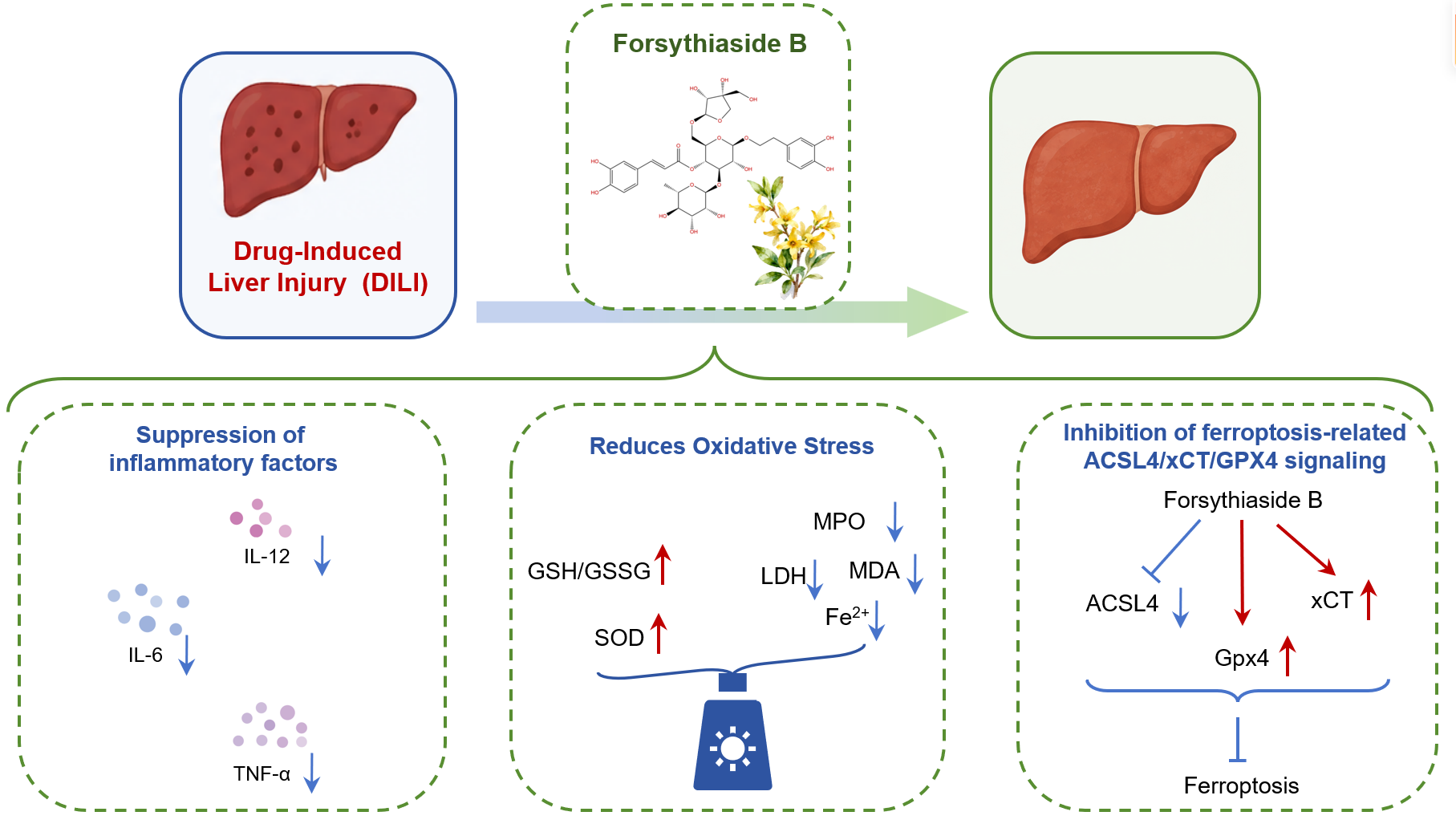
(24) Zhang, L.; Lang, F.; Feng, J.; Wang, J. Review of the Therapeutic Potential of Forsythiae Fructus on the Central Nervous System: Active Ingredients and Mechanisms of Action. J. Ethnopharmacol. 2024, 319, 117275. https://doi.org/10.1016/j.jep.2023.117275.
(25) Wang, Y.; Chen, Y.; Lu, J.; Xiao, Q.; Li, G.; Wang, R.; Chen, R.; Zhang, D.-Q. Forsythoside B Ameliorates Neuroinflammation via Inhibiting NLRP3 Inflammasome of Glial Cells in Experimental Autoimmune Encephalomyelitis Mice. Brain Res. Bull. 2025, 220, 111182. https://doi.org/10.1016/j.brainresbull.2024.111182.
(26) 刘吉瑛. 连翘酯苷B对野百合碱诱导的肺动脉高压的保护作用及机制研究. 硕士学位论文, 西南医科大学, 2025. https://doi.org/10.27215/d.cnki.glzyu.2024.000079.
(27) 吕昌洋. 连翘酯苷B通过Nrf2与NF-κB/MAPK通路缓解金黄色葡萄球菌诱导乳腺炎的作用研究. 硕士学位论文, 山东农业大学, 2025. https://doi.org/10.27277/d.cnki.gsdnu.2025.000697.
(28) S, L.; Y, L.; L, H.; L, T.; F, G. Forsythoside B Alleviates Osteoarthritis through the HMGB1/TLR4/NF-κB and Keap1/Nrf2/HO-1 Pathways. J. Biochem. Mol. Toxicol. 2024, 38 (1). https://doi.org/10.1002/jbt.23569.
(29) Chen, S.; Hu, X.; Chen, F.; Liu, J.; Su, J.; Chen, R.; Wei, W.; Yuan, Z.; An, S.; Ye, L.; Liang, H.; Jiang, J. Forsythoside B Activates Siglec-14 to Inhibit HIV-1 Replication via the JAK1/STAT1 Pathway. Int. J. Biol. Macromol. 2025, 303, 140632. https://doi.org/10.1016/j.ijbiomac.2025.140632.